U.S. Soccer Federation and US Club Soccer Launch New Shared Services Partnership: What Parents Need to Know
U.S. Soccer Federation and US Club Soccer Launch New Shared Services Partnership: What Parents Need to Know
Key Takeaways for Parents
- No Immediate Disruption: Your current season and league play will continue as normal.
- Back-End Support: U.S. Soccer is handling the boring stuff (HR, IT, Finance) so US Club can focus on soccer.
- Pathways Strategy: This is part of a larger plan to lower costs and increase access.
- Unity: This signals a thaw in the relationship between different governing factions.
- Future Growth: The system is being upgraded to handle the post-2026 World Cup boom.
If you have spent any amount of time on the sidelines of a youth soccer field, you know that the landscape of soccer in America can be confusing.
As parents, we just want what is best for our kids. We want a system that makes sense. We want it to be affordable. We want a clear path for player development. The recent announcement from the U.S. Soccer Federation is a step towards that.
The U.S. Soccer Federation has officially entered a new strategic relationship with US Club Soccer. This isn't just a press release; it is a move that could fundamentally change how the back-end of youth soccer operates.

A Major Shift in Operations
U.S. Soccer announced that it is taking over the "shared services" for US Club Soccer. Previously, a company called Wasserman handled these operations. Wasserman is a massive global agency known for sports, music, and entertainment. They managed the internal gears of US Club Soccer for years.
Now, U.S. Soccer is stepping in. They will handle the core back-end operations. This includes Human Resources, Information Technology (IT), and Finance.
This is a managed services agreement (MSA). It means the Federation is now directly supporting the infrastructure of one of its largest members.
Why Does This Matter?
You might be thinking, "Why do I care who handles the HR department for a soccer organization?"
It matters because of alignment.
For years, the complaint has been that U.S. soccer is fractured. You have US Youth Soccer operating on one side, and US Club Soccer on the other. They often have different systems, different rules, and different registration platforms.
By bringing the back-end operations under the U.S. Soccer umbrella, we are seeing a step toward unification. It allows for better data sharing. It potentially streamlines costs. It creates a more cohesive system.
The "Pathways Strategy" Explained
This partnership is a direct result of U.S. Soccer’s "Pathways Strategy."
If you haven't heard of this yet, you will soon. The Pathways Strategy is the Federation's roadmap to fix the youth game. It isn't just about finding the next Christian Pulisic or Sophia Smith. It is about the kid playing recreational soccer on a Saturday morning, too.
The strategy focuses on three main goals:
- Affordability: Lowering the cost of running soccer programs. The goal is to make the game accessible to more families.
- Access: Growing opportunity across all levels. This means reaching underserved communities and rural areas.
- Experience: Improving the daily environment for players, coaches, parents, and referees.
Dan Helfrich, the Chief Operating Officer at the U.S. Soccer Federation, put it clearly.
"Our focus at U.S. Soccer has never been clearer - we exist in service to every player, coach, and referee in this country," Helfrich said. "And we know that people are seeking a youth soccer system that is more aligned, more transparent, more affordable, and easier to navigate."
Breaking Down the Benefits
Let's look at how this specifically helps the ecosystem. When organizations share resources, they save money.
Running a national governing body is expensive. You need complex software to handle player passes. You need insurance protocols. You need financial auditing.
By consolidating these services, U.S. Soccer and US Club Soccer can reduce redundancy. In theory, savings at the top should trickle down.
Here is a quick look at what this partnership aims to improve:
| Area of Focus | The Goal |
|---|---|
| Technology | Unified platforms for easier registration and scheduling. |
| Finance | Reduced overhead costs for the organization. |
| Alignment | Consistent standards across the sport. |
| Growth | Resources freed up to focus on expanding leagues and clubs. |
What Changes for US Club Soccer?
If your child plays in a league sanctioned by US Club Soccer, you might be worried about disruption.
Common leagues under this umbrella include the National Premier Leagues (NPL) and the ECNL Girls.
According to Mike Cullina, the CEO of US Club Soccer, operations for the average member remain the same.
"For US Club Soccer staff, its thousands of clubs and leagues, and more than 800,000 annual participants nationwide, operations remain the same," the announcement stated.
The difference is that they now have "more direct access to U.S. Soccer’s systems, expertise, and support."
Mike Cullina is staying on as CEO. He views this as a service to the sport first.
"We’ve often told our staff, board and league partners: ‘If it’s good for soccer, it’s good for US Club Soccer,’" Cullina said. "This is a huge step forward in unifying soccer."
The Context of the "Alphabet Soup"
To understand the weight of this news, we have to look at the current state of Youth Soccer.
We often joke about the "alphabet soup" of leagues. You have the ECNL, GA, DPL, E64, NAL, and MLS NEXT. It is overwhelming.
Historically, US Club Soccer was formed to offer an alternative to the rigid structures of the past. They pioneered the "club-centric" model. This allowed clubs to pass players between teams more easily. It changed player development for the better.
However, this also led to a split. We ended up with two parallel systems.
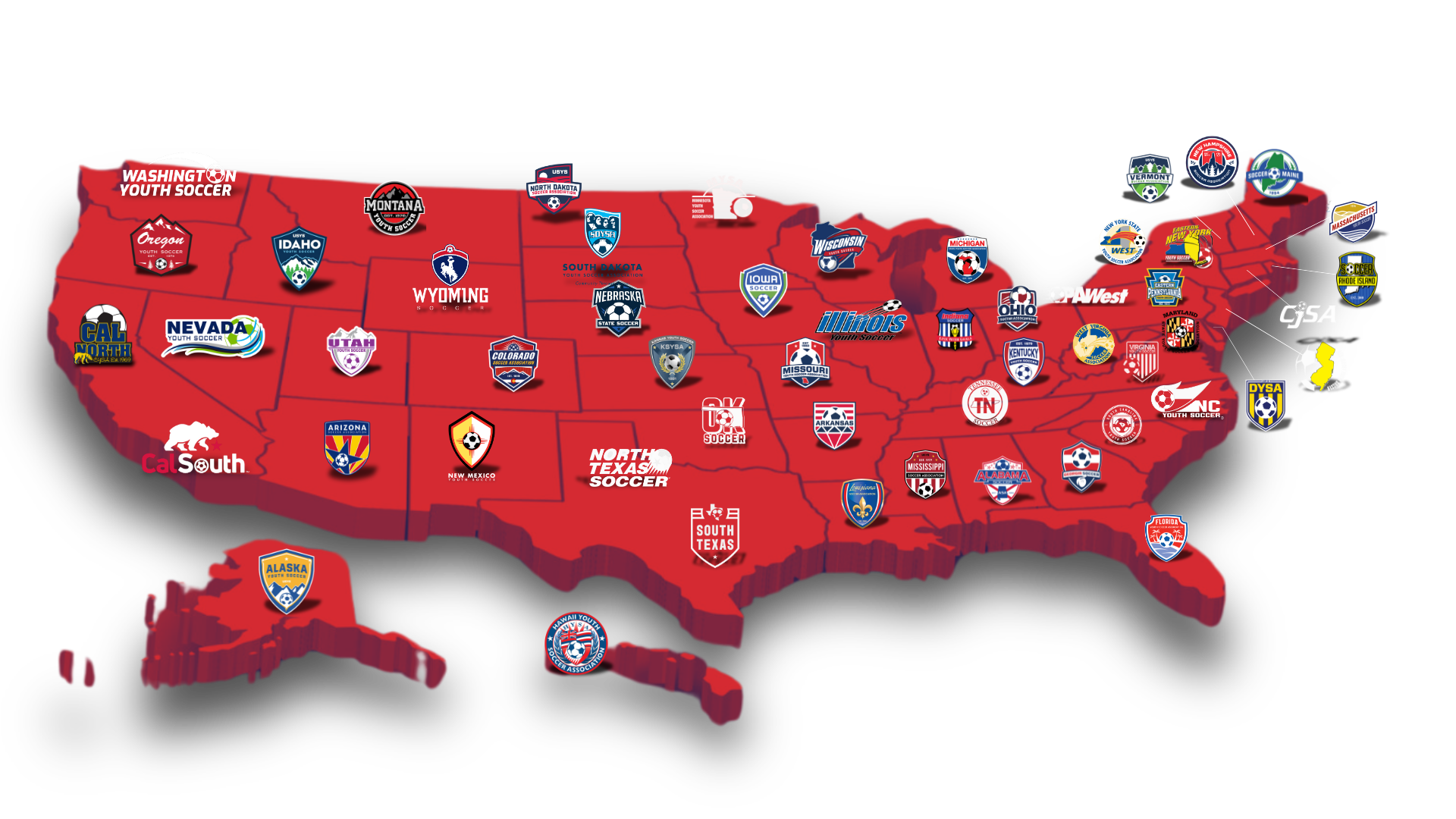
- US Youth Soccer (USYS): Based on state associations (like Cal South or Eastern New York).
- US Club Soccer: A national organization without state boundaries.
This competition was good for innovation. But it was bad for clarity.
This new partnership suggests that the era of strict separation might be ending. U.S. Soccer is trying to bring the family back together. They aren't eliminating US Club Soccer. They are powering it.
Addressing the "Pay to Play" Problem
One of the biggest criticisms of American soccer is the cost.
Elite travel soccer is expensive. Between coaching fees, travel costs, and tournament registrations, it prices many families out.
The Pathways Strategy explicitly targets "lowering the cost of running soccer programs."
If U.S. Soccer can provide world-class IT and administrative support to US Club Soccer, that is a massive cost lifted from the organization.
Ideally, US Club Soccer can pass those savings on to the leagues. The leagues can pass them to the clubs. And finally, the clubs can pass them to us—the parents.
It is a trickle-down theory, but in a non-profit sports model, it has a real chance of working.

Impact on Player Development
We talk a lot about the boys youth soccer pyramid and the girls' pathway.
Consistency is key for development. When different organizations use different standards, players fall through the cracks.
For example, think about the upcoming youth soccer age group changes in 2026. U.S. Soccer is pushing to change how age groups are calculated.
Implementing a change like that is a logistical nightmare. It requires changing registration software, league rules, and insurance policies across the country.
With U.S. Soccer managing the IT and back-end for US Club Soccer, this transition becomes much smoother. They can ensure that the changes are rolled out uniformly.
This helps players. It ensures that a kid playing in the Girls Academy has a similar administrative experience to a kid in the ECNL Regional League.
A Model for Future Partnerships?
Interestingly, the press release mentioned that this is just the beginning.
U.S. Soccer is "engaging with other National Associations and members to explore managed services agreements."
This is a clear signal. U.S. Soccer wants to be the central hub for operations.
Imagine a future where US Youth Soccer, AYSO, and US Club Soccer all run on the same backbone.
- Unified player history.
- Single coaching license databases.
- Universal referee tracking.
This would be a game-changer for college soccer recruiting. Scouts would have an easier time tracking players across different leagues.
It would also help with the pathway to the United States National Teams. Talent identification relies on good data. Centralized data finds more players.

What Parents Should Watch For
As we move forward, there are a few things we should keep an eye on.
First, look for changes in registration platforms. If your club uses a US Club Soccer platform, you might see updates or migrations in the coming seasons.
Second, watch for announcements regarding league alignment. With closer ties, we might see better cooperation between US Club leagues like the Pre-ECNL and other national platforms.
Third, pay attention to refereeing standards. A major goal is to improve the experience for referees. A unified system could lead to better training and retention of officials.
The Role of Technology in Youth Sports
We cannot underestimate the IT aspect of this deal.
Youth sports technology is often clunky. We have all struggled with buggy apps and crashing websites on deadline day.
U.S. Soccer has the resources to invest in enterprise-level technology.
By taking over IT for US Club Soccer, they can implement modern security standards. They can protect our children's data better. They can make the user experience smoother.
This allows the soccer people to focus on soccer. Mike Cullina and his team at US Club can focus on league structures like the DPL or USYS National League competitors, rather than worrying about server maintenance.
A Step Toward 2026 and Beyond
We are rapidly approaching the 2026 World Cup on home soil.
The energy around the sport is growing. We expect a massive influx of new players after the World Cup.
The current infrastructure of youth soccer would struggle to handle a massive boom in participation. It is too fragmented.
This partnership is about building a foundation that can hold the weight of the future. U.S. Soccer is reinforcing the beams.
They are preparing the ecosystem to welcome millions of new families. They want to ensure those families don't walk into a confusing mess of organizations.
Trusting the Process
It is easy to be cynical about sports politics. We have seen power struggles before.
However, the tone of this announcement is different. It emphasizes "service."
Dan Helfrich’s background is in operations. He understands efficiency. Mike Cullina has always been a "soccer first" leader.
The fact that Wasserman is stepping aside to let the Federation lead is significant. It returns the control of the game to the governing body.
This aligns with the mission of Play Club Soccer. We believe in transparency and education.
When the governing bodies work together, the game improves.
Conclusion
The partnership between U.S. Soccer and US Club Soccer is a positive development. It is a technical change with emotional benefits.
It promises a future where the focus returns to the field.
For the parent driving the minivan, it offers hope for less confusion. For the coach, it offers better support. For the player, it offers a more connected pathway.
We will continue to monitor how this rolls out. But for now, we can view this as a win for the unity of the game in the United States.
As the landscape evolves, staying informed is your best tool. Understanding why changes are happening helps us navigate the journey with our kids. This partnership is a strong step in the right direction.